Ima Hart’s Death and Tully’s Loss of a Guardian
Firefly LaneIma Hart’s death is both a bereavement and the end of Tully Hart’s childhood home: the grandmother who raised her leaves Tully her estate and a letter of love, but Tully’s mother, Dorothy Hart, refuses custody, and social services sends Tully to live with a foster family. The sequence turns loss into displacement. Tully inherits the means to pursue a future Ima believed in, yet loses the person who had made home feel like a place she could return to.
The Discovery and Ima’s Farewell
The loss becomes undeniable in an ordinary morning ritual. Tully wakes at six to dress for work; the household rule is that she must not leave without saying goodbye to her grandmother. She taps at Ima’s door, calls to her, and slowly pushes it open. In the dim room, she can make out the familiar coil of white hair and ruffle of the nightdress, but Ima’s chest is still. Tully touches her grandmother’s wrinkled cheek and finds the skin cold, with no breath coming from her slack lips. The precise, quiet details make the discovery a collision between routine and irreversibility: the goodbye Tully came to give cannot be answered.
Tully’s shock gives way to memories of the care Ima provided over the years. She remembers her grandmother braiding her hair for a seventh-birthday party and telling her that her mother might return if she prayed hard enough. Later, Ima acknowledged that prayer did not always bring the person a child wanted. That history gives the death more than the force of a sudden loss: the person who had explained absence and softened it is absent too.
Among inexpensive jewelry that Ima rarely wore, Tully finds a folded pink letter bearing her name. It apologizes for leaving her alone, recognizes how afraid she is of being left behind, and says that Ima would have stayed longer if she could. Ima promises that she and Tully’s grandfather will watch over her from Heaven and calls Tully the greatest joy of her life. The letter’s past-tense declaration of love catches on the single word Tully cannot accept: “Were.” The narration then makes the fact plain: Gran is gone. The message offers an enduring bond, but cannot undo the physical finality Tully has just encountered.
Bereavement Becomes Displacement
Ima’s death is followed by another abandonment. At the funeral, Tully’s mother, Dorothy Hart, appears, but after a brief exchange she disappears into the crowd. Tully is left with the question she cannot bring herself to ask before the mourners stream into the parking lot. The funeral therefore does not restore the mother-daughter connection that Ima’s care had partly compensated for; Dorothy’s departure makes Tully’s fear of being left behind immediate again.
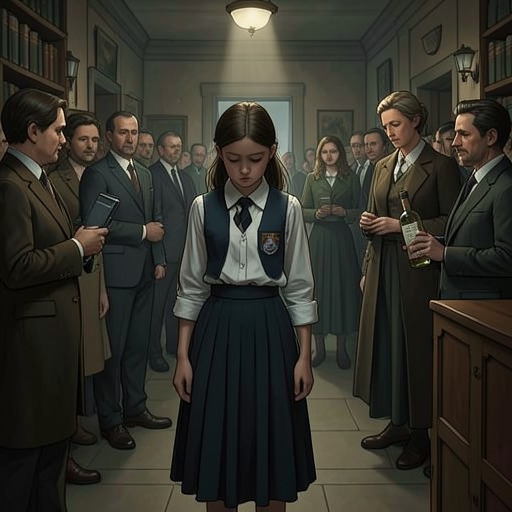
Social services soon arrives to arrange Tully’s future. The caseworker tries to say the right things but keeps glancing at her watch as she waits outside Tully’s bedroom. Tully protests that she is almost eighteen, has paid the household bills, and should be allowed to live alone. Her argument is practical, but it also registers what the proposed move means: the home she shared with Ima is about to be taken from her along with its occupant.
At a meeting with the officials, Tully corrects the caseworker’s use of her formal name, asking to be called Tully. She learns that Dorothy has refused custody. A foster placement has been found, and she will be one of several displaced teenagers in the family’s care. She is told that she can stay at her current school; the reassurance does not change the central fact that she must leave the home she has known.
Inheritance Without a Home
The meeting also reveals the scale of Ima’s bequest. She leaves Tully both homes, the car, bank accounts, and stocks, along with instructions to continue monthly payments to Dorothy. Ima believed that money was the surest way to keep track of her daughter, who had proved reliable about staying in contact when payments were due. The inheritance thus carries a complicated record of care: Ima provides for Tully’s future while using financial support to maintain a thread of contact with the daughter who will not take responsibility for her granddaughter.
The officials propose selling the properties so Tully will not have to worry about finances. Tully objects that selling both would mean she had no home at all. The distinction is central to the scene: financial security can sustain her, but it cannot replace the place and person she has lost. Ima’s will specifies that Tully should be able to attend any college, and the caseworker repeats Ima’s confidence that Tully will someday win a Pulitzer Prize. Tully is moved close to tears, but the promise of education and achievement arrives alongside the immediate prospect of being sent away.
Grief Held by Friendship
When Tully tells Kate Mularkey that Ima died while Kate was away, her anger has accumulated across several losses. Asked whom she is angry with, she names Cloud, Gran, and God. Kate responds with sorrow rather than correction or advice, and Tully finally breaks into sobs. Kate holds her and lets her cry. This later disclosure recalls an earlier moment in which Tully, after crying in front of Kate, flinched at the unfamiliarity of being held and clung to her, afraid that without Kate she would float away and be lost. The repeated embrace gives their friendship a particular role in Tully’s life: it does not reverse abandonment, but offers bodily presence where absence has left her unsteady.
That pattern of care recurs in later crises. When Kate is bleeding and collapses, Tully steadies her, gets her toward a phone, and insists on riding in the ambulance, repeating that she is there. In the hospital, the friends later argue over Johnny Ryan’s condition and the demands of news reporting; their bond includes conflict as well as comfort. Much later, when Kate’s brain cancer has made her faculties unreliable and she warns Tully that she may not recognize her, Tully stays beside her. On Kate’s last hospital night, Tully sends Johnny home with the children, moves her bed close to Kate’s, and plays a tape of her final show so they can watch together. She asks Kate not to treat her as if she is dying, because being herself helps Kate remember who she is. In this later reversal, Tully can provide the companionship she once needed after Ima’s death.
The Event’s Lasting Significance
Ima’s death reorganizes Tully’s life through two linked facts: the person who raised her is gone, and the mother who might have taken her in will not. The letter preserves Ima’s affection in words, and the estate gives Tully material resources and an educational possibility, but neither prevents foster placement or answers her immediate need for a home. The inheritance is therefore not a simple rescue; it separates the prospect of future independence from the present experience of being left behind.
The episode also establishes why chosen relationships matter so deeply to Tully. Kate’s embrace and willingness to listen answer a need that the officials’ arrangements cannot address, while Tully’s later acts of support show that care can move in both directions across a lifelong friendship. The contrast does not erase the difference between a guardian’s death and a friend’s presence. Instead, it makes the story’s central distinction legible: practical provision can help secure a future, but the experience of being accompanied must be made person to person.